Venomous spiders present real physiological risks in Wake County suburban residences, particularly within quiet, unconditioned zones of the structure. The southern black widow (Latrodectus mactans) favors low-level…
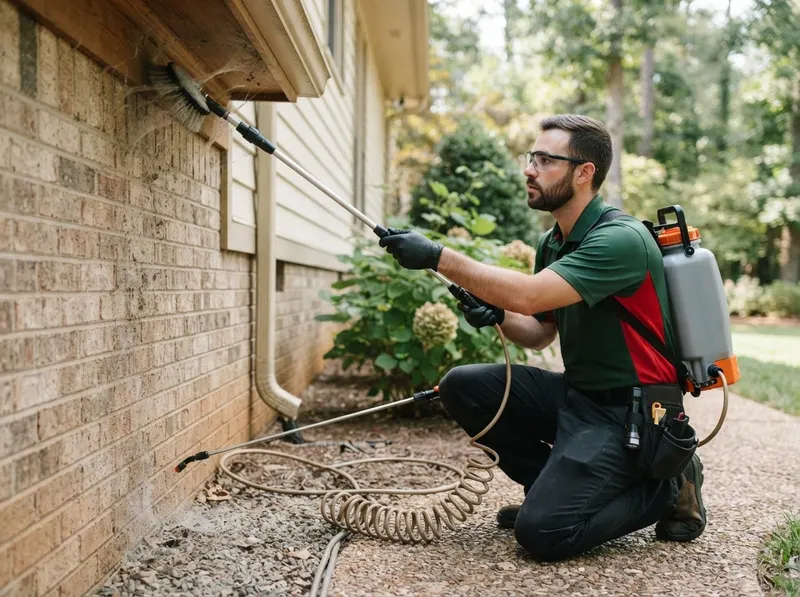
Venomous spiders present real physiological risks in Wake County suburban residences, particularly within quiet, unconditioned zones of the structure. The southern black widow (Latrodectus mactans) favors low-level voids such as garage corners, irrigation valve boxes, and foundation access wells, where females anchor chaotic, high-tensile web tangles around egg cases holding up to 400 spiderlings each. Conversely, brown recluse spiders (Loxosceles reclusa), infrequently native to North Carolina but regularly introduced via packing cartons, avoid open spaces entirely, nesting inside dry wall voids, insulated basements, and unsealed subfloors. Retail aerosol sprays routinely fail against these species because they disperse airborne repellents without penetrating the dense web silk or subfloor cracks where adults shelter.
Structural geography across Cary exacerbates these arachnid entry pathways. In established lakeside communities like Lochmere and wooded developments like MacGregor Downs, high outdoor humidity drives female black widows toward the dry masonry perimeters of walkout basements and patio overhangs. Newer master-planned communities like Amberly and Carpenter Village feature expansive brick-veneer construction; unshielded weep holes at the sill plate serve as natural corridors into exterior wall cavities. In Wellsley, Oxxford Hunt, Twin Lakes, and Preston, homes constructed with ground-level crawlspaces adjacent to heavily shaded tree lines require physical interior barrier adjustments. Crawlspace vents lacking fine-mesh screening allow mature specimens to migrate inward along plumbing penetrations and floor joists.
Targeted de-webbing paired with barrier shielding addresses the structural root of infestation without obligating homeowners to recurring chemical contracts. Physical removal comes first: vacuum extraction with sealed HEPA equipment captures adult spiders and adhesive egg sacs directly from window framing, exterior eaves, and joist bays, preventing the release of secondary populations. Technicians then introduce a localized silica dust into dry voids and weep holes, mechanically desiccating arachnids on contact. A continuous 3-foot liquid microencapsulated residual barrier around the masonry foundation perimeter prevents secondary recruitment from adjacent mulch beds or landscape timber, establishing immediate structural protection.
Every job gets a firm, written price after a free on-site visit.
Tell us about your brown recluse and black widow spider de-webbing & shielding job in Cary and we'll send a clear, written quote, usually the same day.
 PestHarbor Pest Control