Parasitic pest pressure escalates rapidly across Cary between April and October due to sustained relative humidity above 70 percent and dense forest canopies. Residences bordering Fred G. Metro Bond Park, Hemlock…
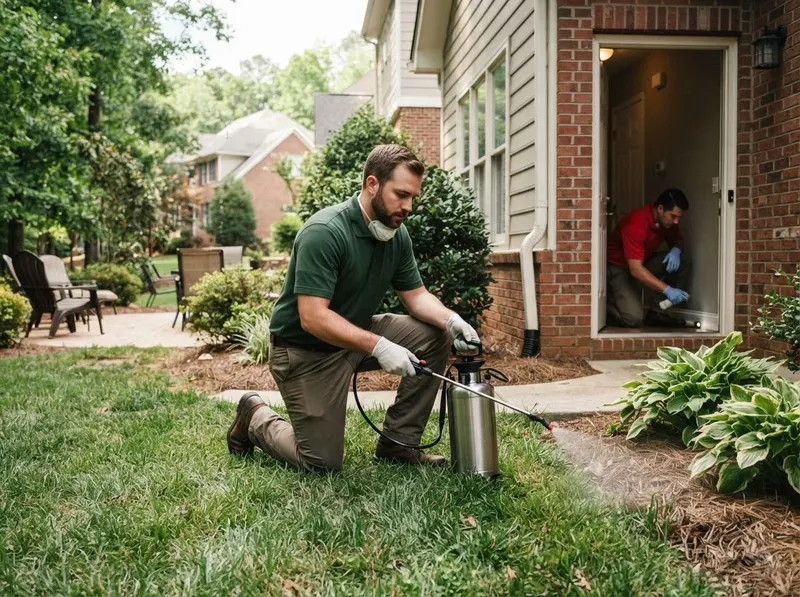
Parasitic pest pressure escalates rapidly across Cary between April and October due to sustained relative humidity above 70 percent and dense forest canopies. Residences bordering Fred G. Metro Bond Park, Hemlock Bluffs Nature Preserve, and wooded lots in MacGregor Downs face elevated exposure to blacklegged ticks (Ixodes scapularis) and lone star ticks (Amblyomma americanum) carried by white-tailed deer and small rodents. When these vectors enter residential turf in Lochmere or Preston, immature nymphs migrate into pine straw beds, tall fescue lawns, and crawlspace moisture zones. Standard consumer sprays degrade rapidly under direct sunlight and leave unhatched pupae unaffected, allowing re-infestation within 14 days.
Eradication requires interrupting the continuous reproductive cycle through combined indoor and outdoor interventions. Interior eradication addresses carpet fibers, baseboards, and pet bedding zones where flea larvae feed on organic debris. Formulations combine an adulticide for knock-down with an insect growth regulator (IGR), such as pyriproxyfen, which prevents flea larvae from pupating and adult ticks from depositing viable eggs. Exterior barriers extend across a 20-to-30-foot perimeter around the foundation, targeting transition areas where turf meets natural woods or ornamental beds in Amberly, Wellsley, and Carpenter Village.
Selecting a dual-zone eradication fits properties experiencing visible biting activity, live flea dirt in pet coats, or embedded ticks retrieved after yard exposure. A single-zone interior application remains insufficient if outdoor wildlife continuously re-seeds the turf, while an exterior-only treatment leaves emerging indoor pupae undisturbed. The dual protocol carries an initial trade-off: occupants and domestic animals must vacate the interior space for 2 to 4 hours post-treatment until liquid residues fully dry on structural surfaces.
1. Technicians conduct an initial diagnostic sweep to chart host bedding zones, crawlspace entry points, and perimeter tick harborage. 2. Interior baseboards, under-furniture floor surfaces, and upholstered resting areas receive an ultra-low-volume application of botanical pyrethrin combined with juvenile growth regulators. 3. Exterior crews apply residual microencapsulated suspension across turf margins, shrub perimeters, and shaded pine straw beds up to the property tree line.
Every job gets a firm, written price after a free on-site visit.
Tell us about your fleas and ticks lawn & interior eradication job in Cary and we'll send a clear, written quote, usually the same day.
 PestHarbor Pest Control