Stinging insect nest extraction is distinct from simple surface spraying because it physically removes the nest structure, brood combs, and residual pheromone footprints rather than merely dispersing adult flyers. In…
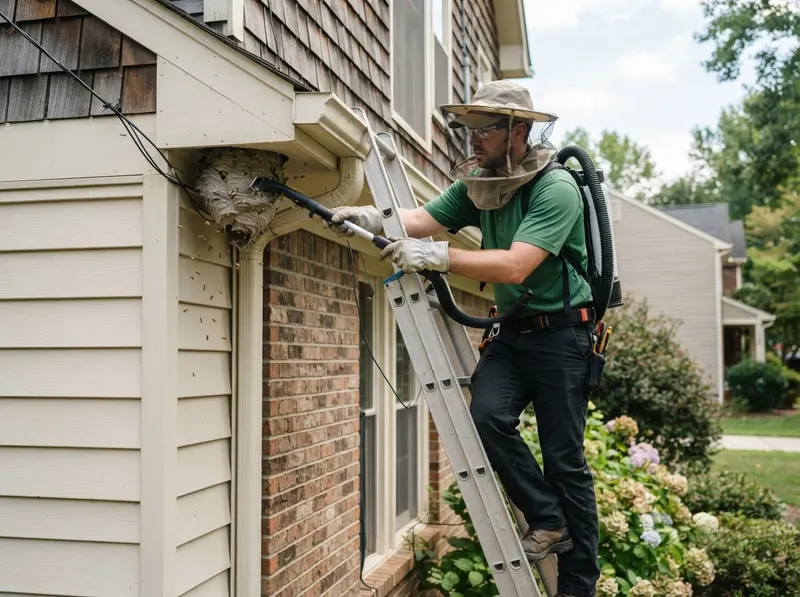
Stinging insect nest extraction is distinct from simple surface spraying because it physically removes the nest structure, brood combs, and residual pheromone footprints rather than merely dispersing adult flyers. In Cary neighborhoods like Amberly, Carpenter Village, and Twin Lakes, modern construction features deep roof overhangs, complex trim fascia, and vinyl soffits that harbor aerial colonies. A retail aerosol spray typically forces worker wasps deeper into wall insulation or attic spaces, resulting in indoor breaches through recessed lighting cans and ceiling returns. Targeted mechanical extraction eliminates the colony nucleus immediately, preventing secondary carpet beetle infestations that routinely feed on abandoned comb protein inside wall cavities.
Subterranean yellow jackets present unique risks across older forested tracts in Lochmere, Preston, and MacGregor Downs, where abandoned pine root systems and rodent tunnels provide pre-formed nesting voids. Proximity to recreational corridors such as Fred G. Metro Bond Park, Hemlock Bluffs Nature Preserve, and Koka Booth Amphitheatre sustains high summer insect density across Wake County. Field eradication relies on high-pressure, micro-encapsulated pyrethroids delivered directly into the core entrance, followed by excavation of the subterranean paper envelopes. Homeowners avoid recurring chemical contracts because these targeted procedures destroy the queen and comb within a single dedicated visit, leaving non-volatile residuals that prevent sibling queens from utilizing the established flight corridor.
Every job gets a firm, written price after a free on-site visit.
Tell us about your stinging insect nest extraction job in Cary and we'll send a clear, written quote, usually the same day.
 PestHarbor Pest Control